16 Cubits Temporary Pavilion
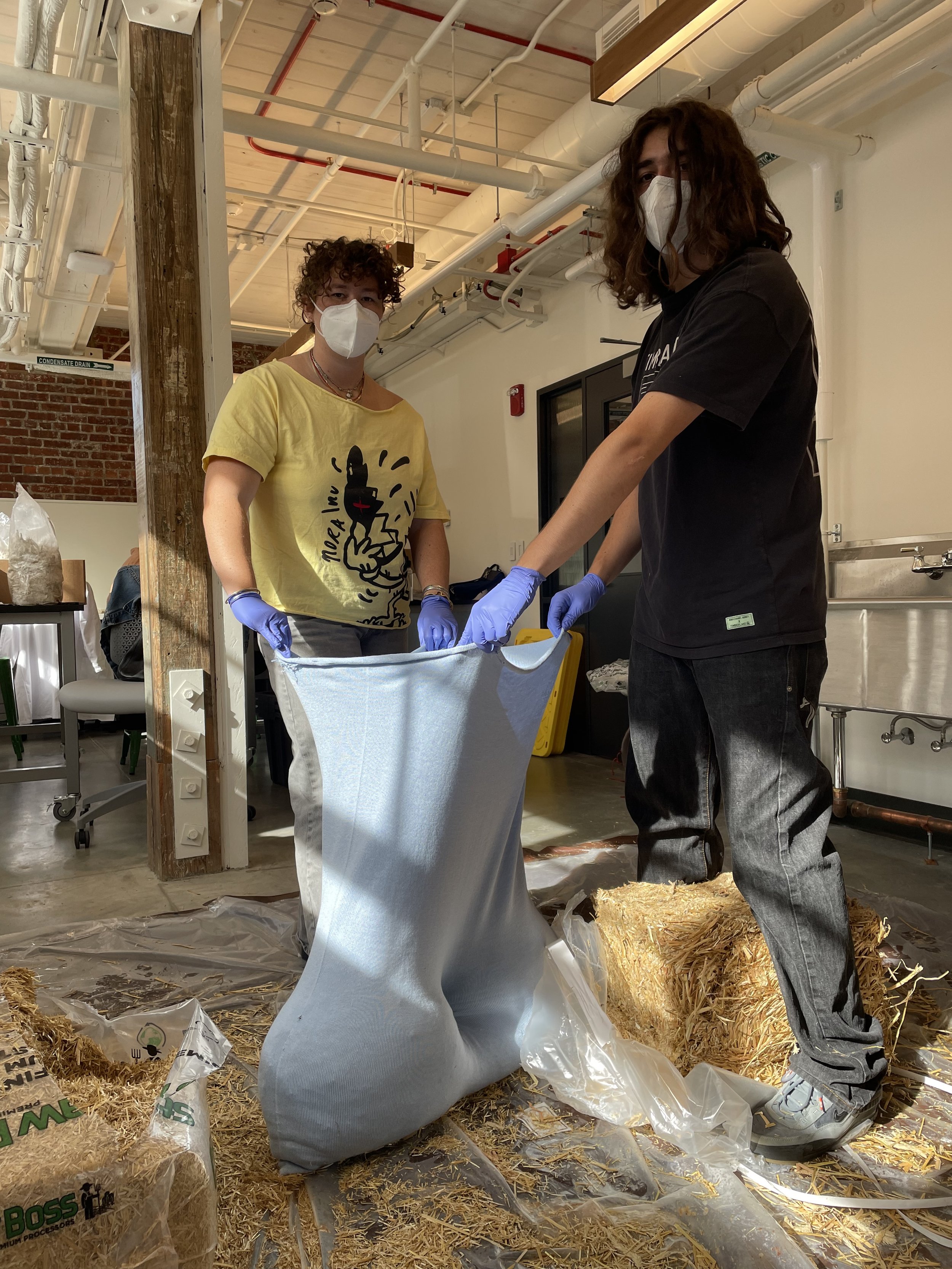
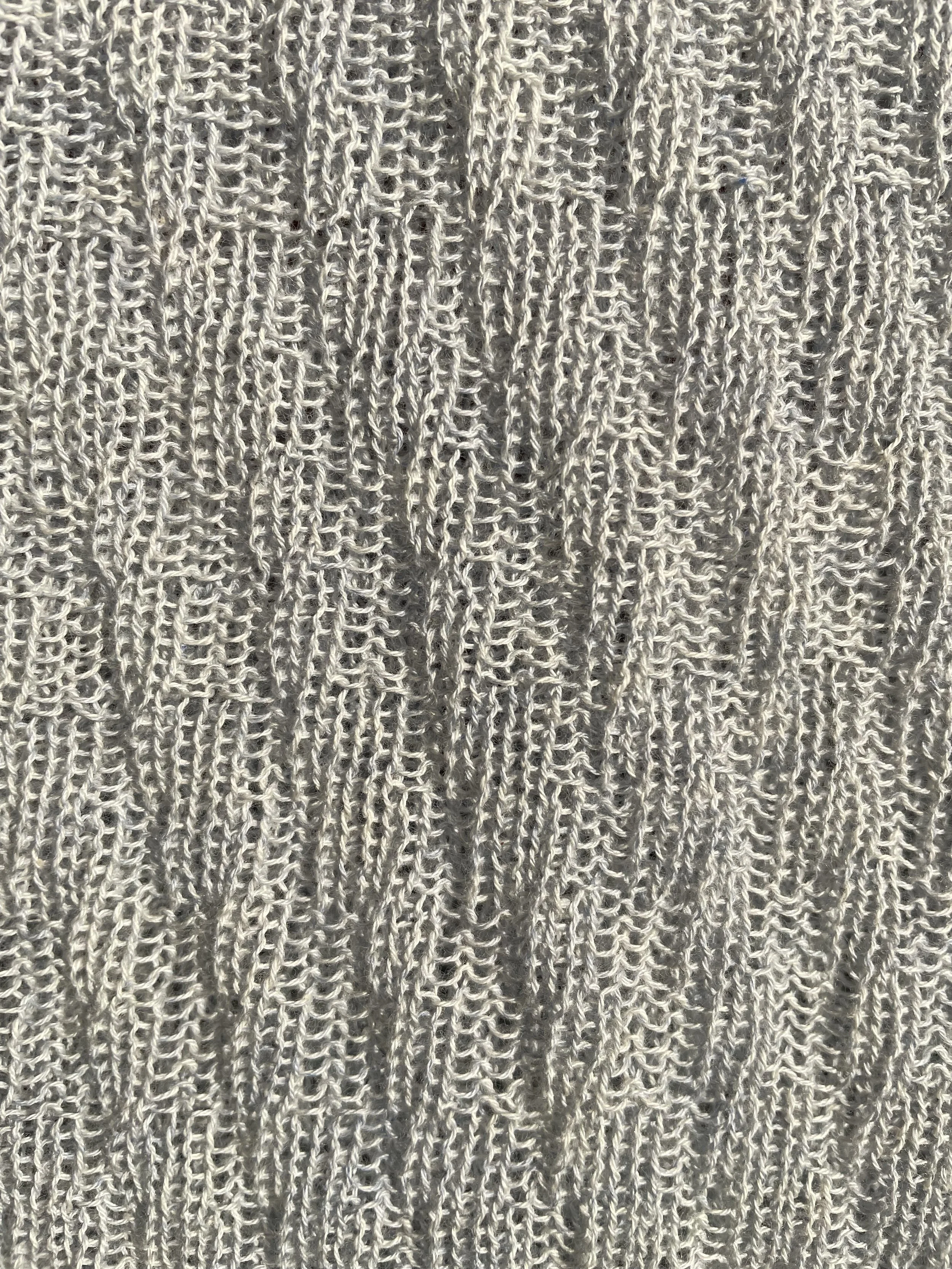
A mycelium based. temporary pavilion for the 16 Cubits Sukkah Design Festival. The festival brings together architects and students interested in working on eco-centric projects and allows them to prototype models for sustainable, bio-based architecture. Designed and built off-site in modueles and assembled on site at an organic farm in Bethelhelm, CT using entirely biodegradable, locally sourced materials including locally grown oyster mushroom mycelium in hay-filled 3d knits.
Textiles & Bio Design Lab Lead Professor: Yu Nong Khew
Textiles & Bio Design Lab Student Researchers: Elias Kanteres, Lucas Bu-Hoan, Alexandra Simon, Marouan El-Asery
Soft Robots Lab Fabrication Contributor: Sonia Roberts
Digital Fabrication Expertise: Yuxuan Mei
Student Design Workers: Miles Hallett-Brown, Leo Ferry
Student Bio Workers: Paul Sliker, Willow Barry
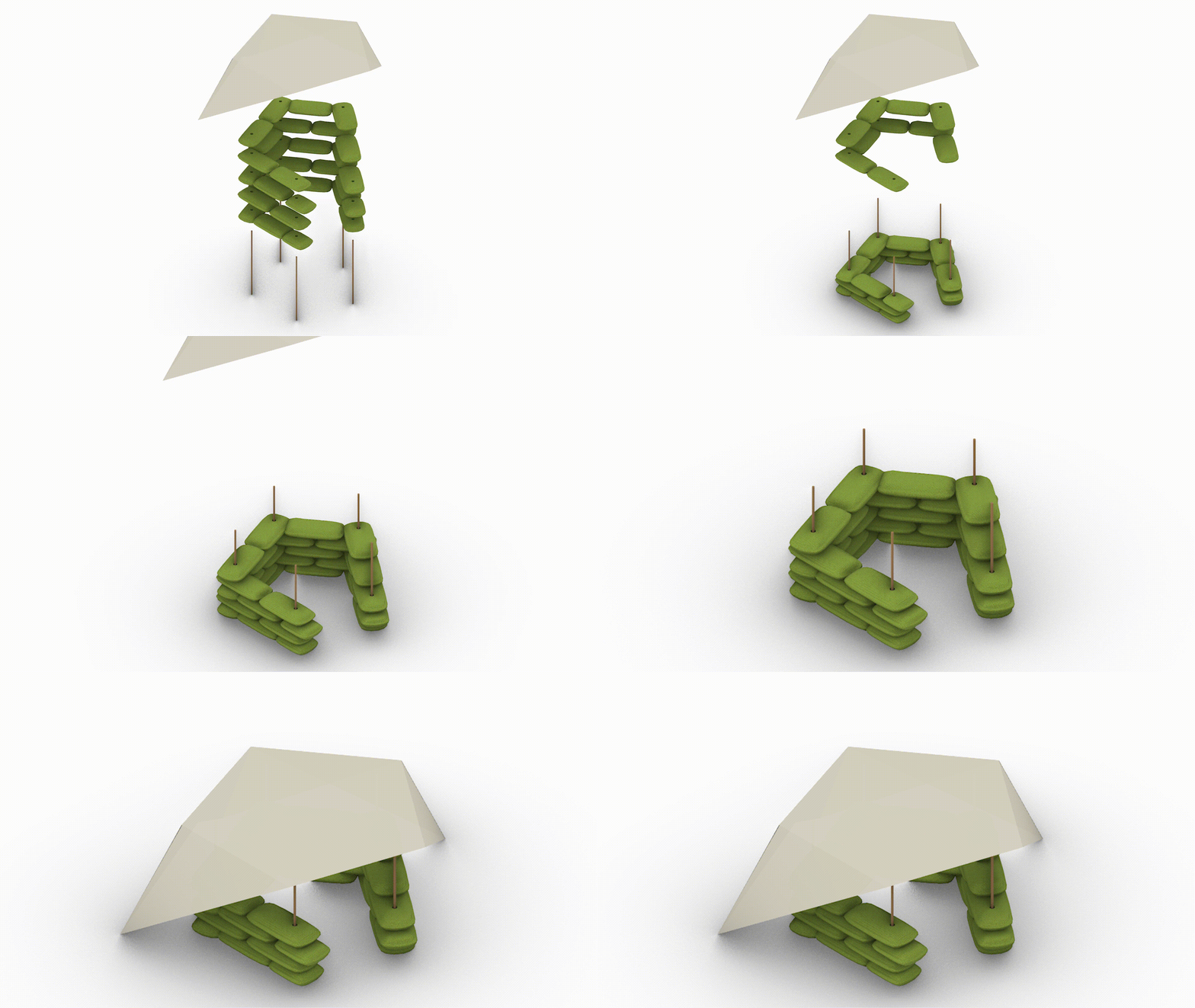
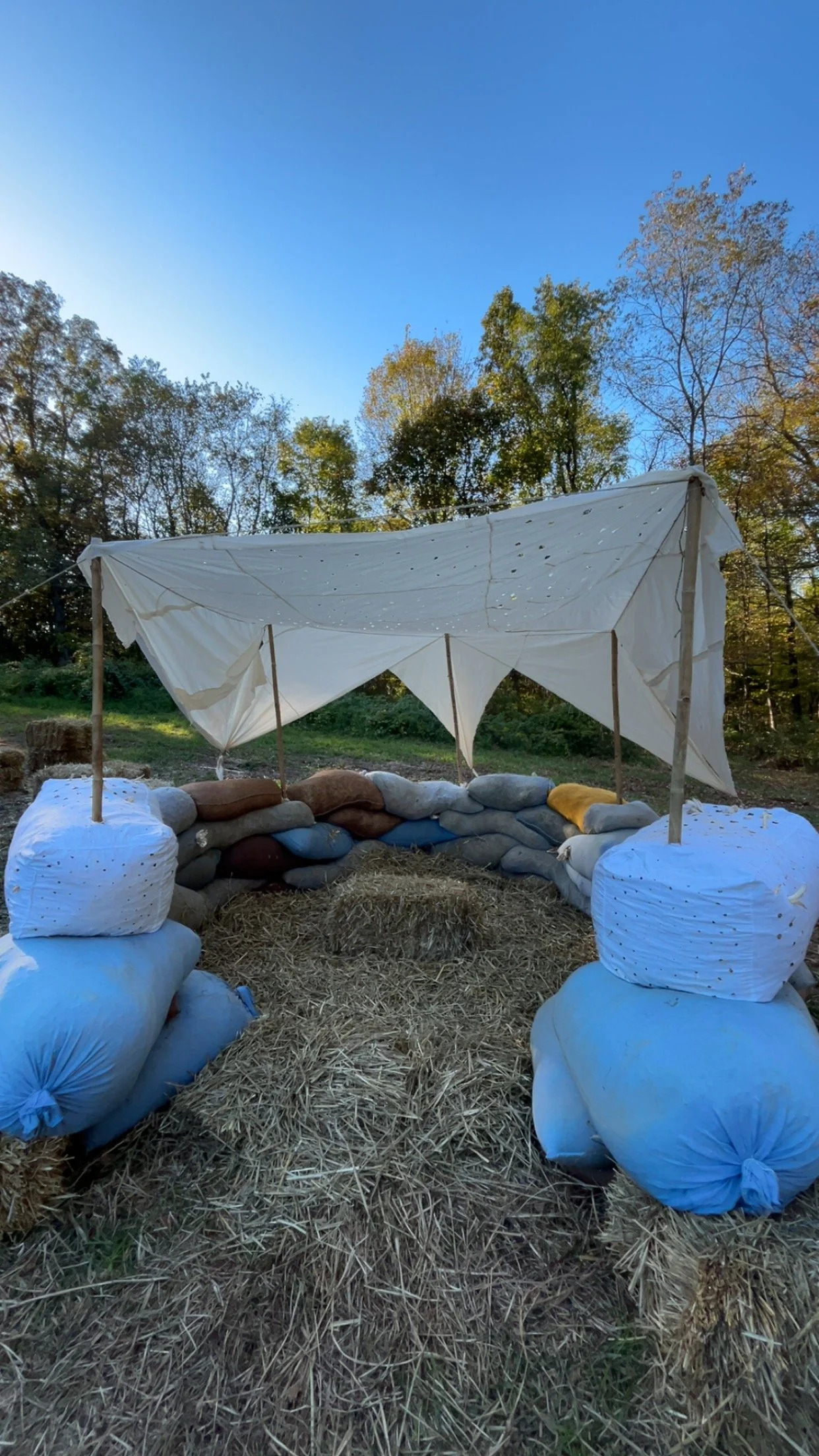
All materials used are biodegradable and the structure is a study into temporary archetcture — built with the goal of eventually returning to the farmland it was built on. It primarily focuses on exploring the properties and capabilities of mycelium as a material for architectural production.
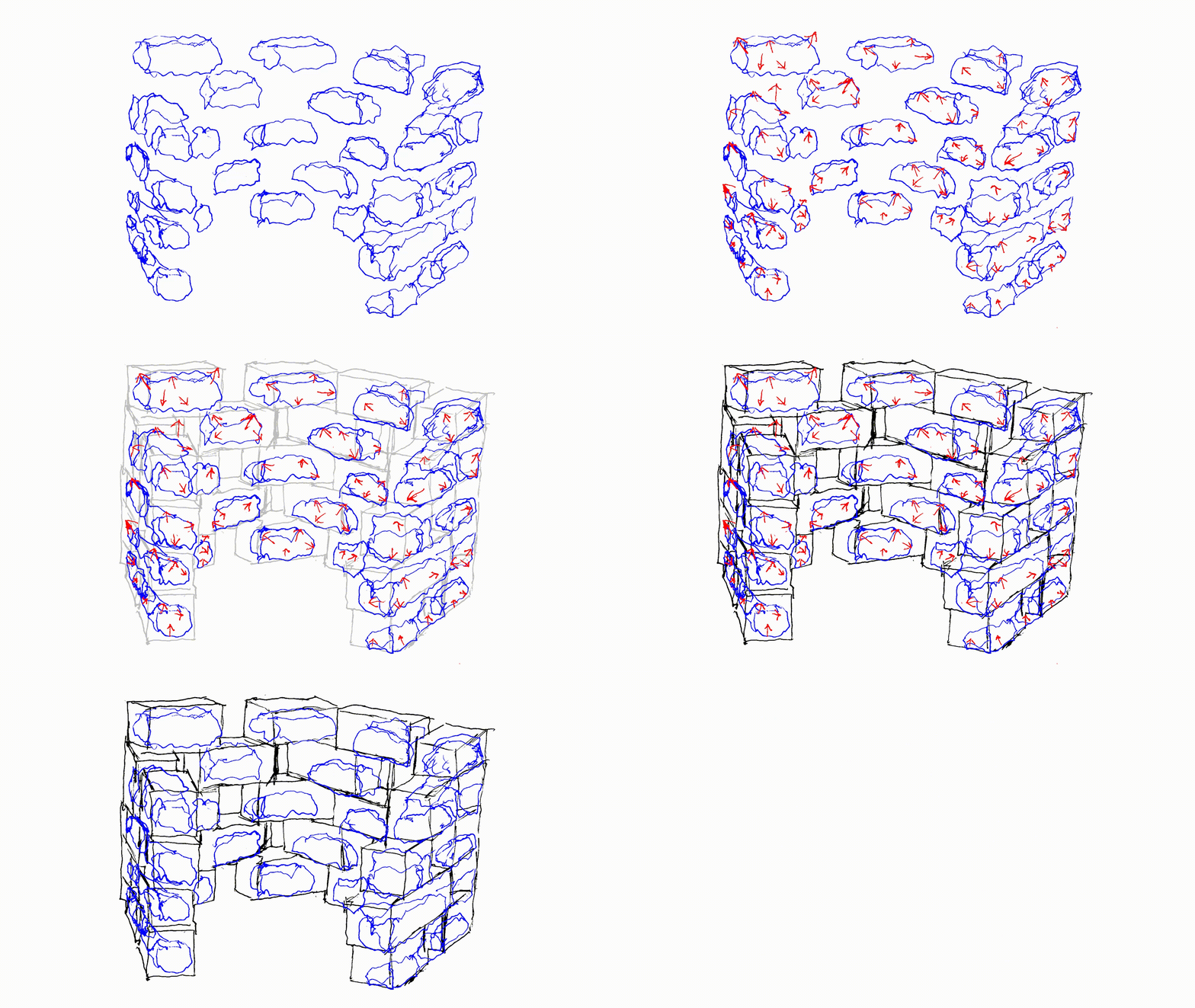
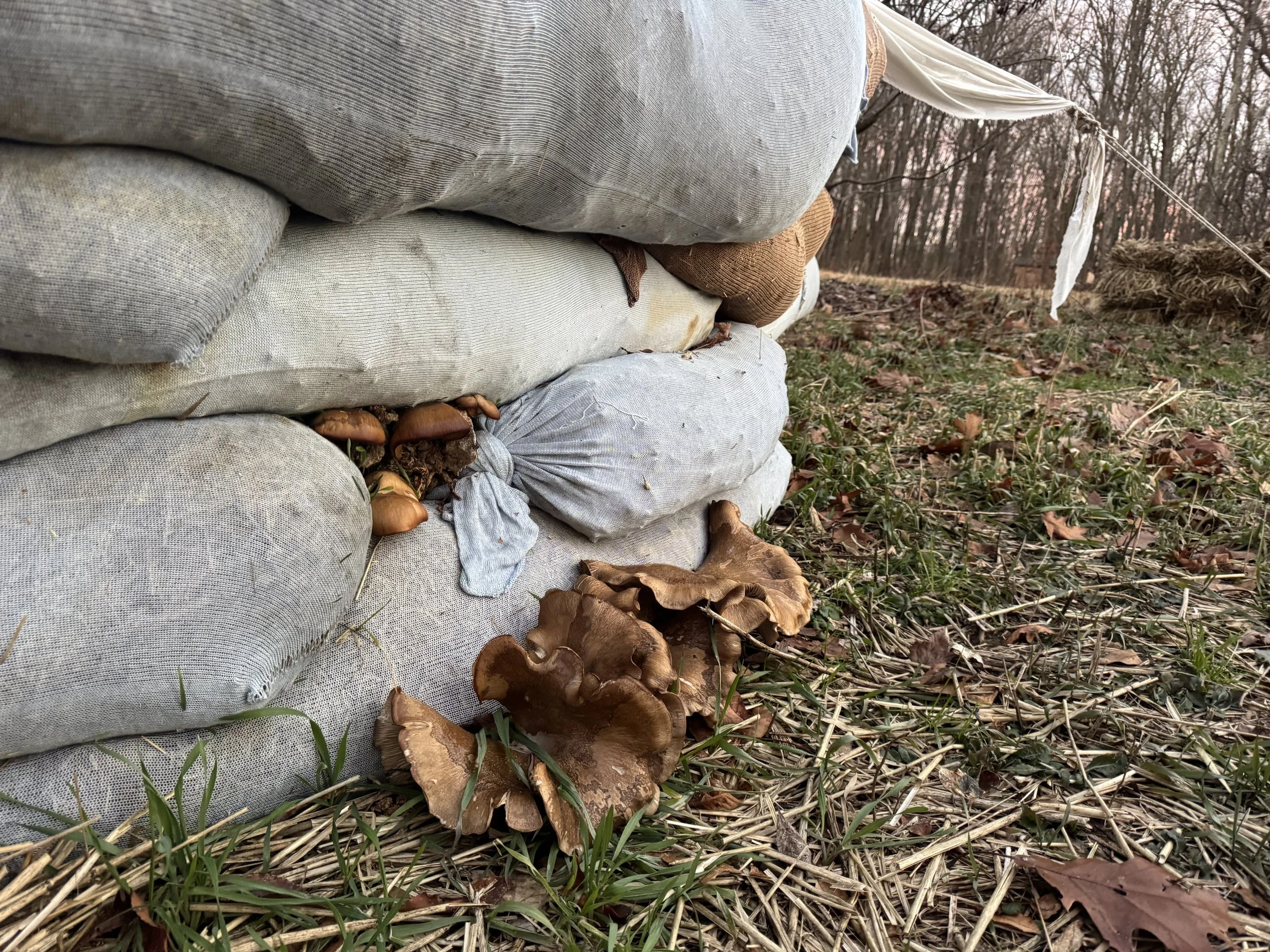
Given the correct conditions, the mycelium will consume the hay fillings allowing the structure to sun-dry and harden, turning the soft and transportable pillows into biodegratable structural blocks. In certain humidiity conditions the blocks can also fruit mushrooms as shown above.
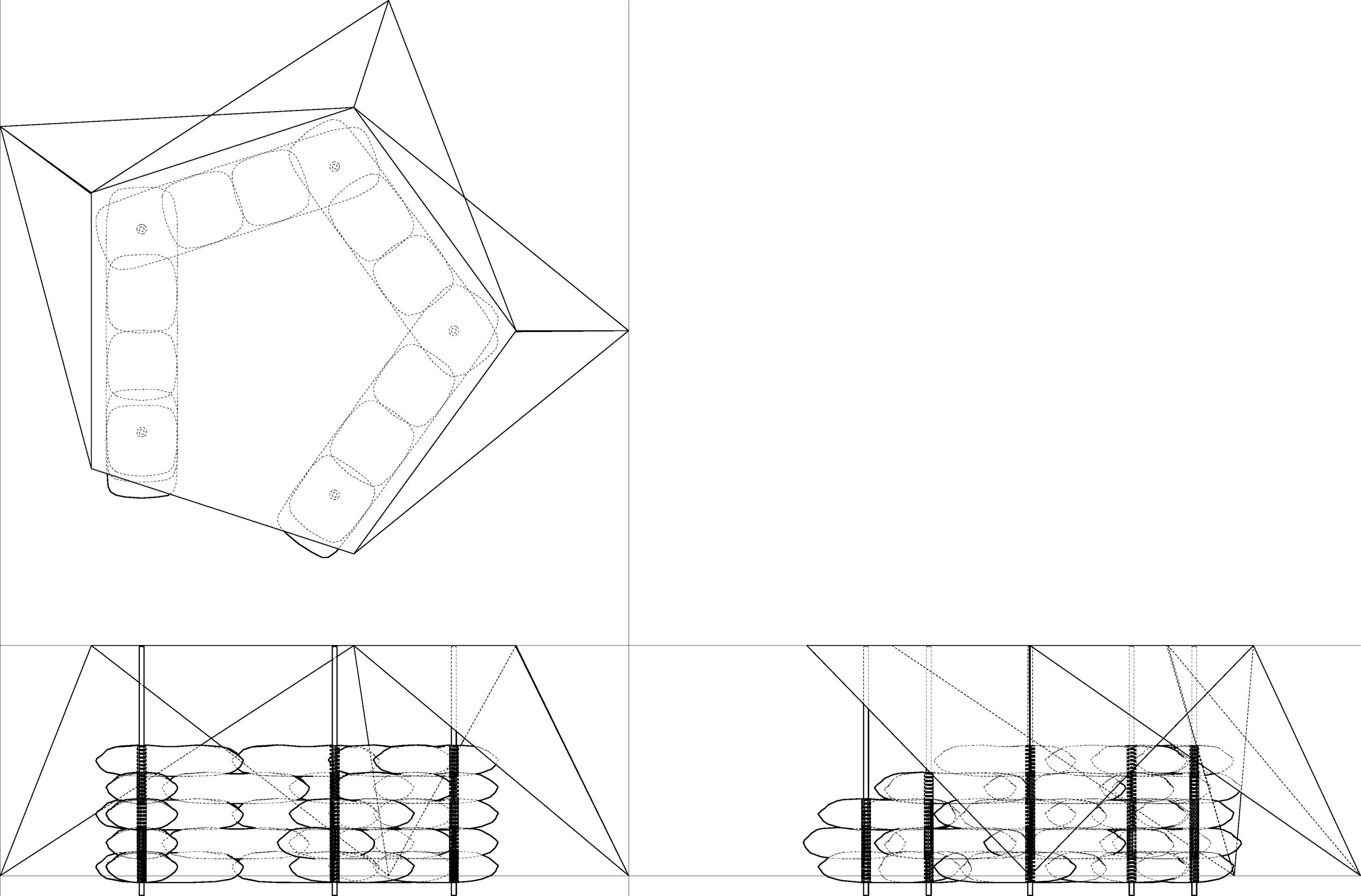
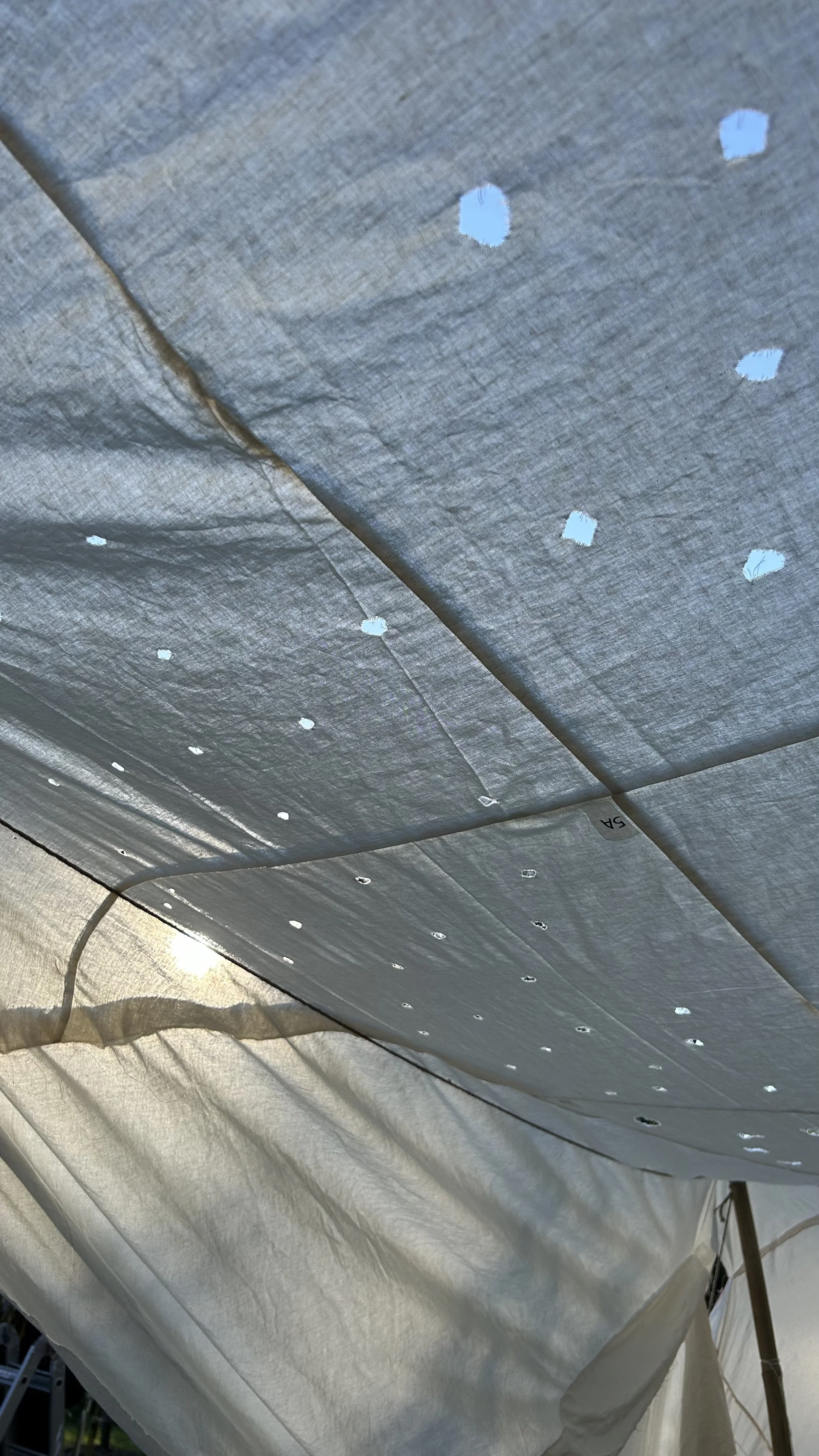
Laser-cut organic canvas pannels sown together create a tented roof with intentional light leaks which cast shadows mimicking the holes in casings which fruiting mushrooms grow out of.