
Amoskeag Gallery
Fall 2025 semester project for Architecture 1 at Wesleyan University with Professor Alexandra Thompson.
Adaptive Reuse
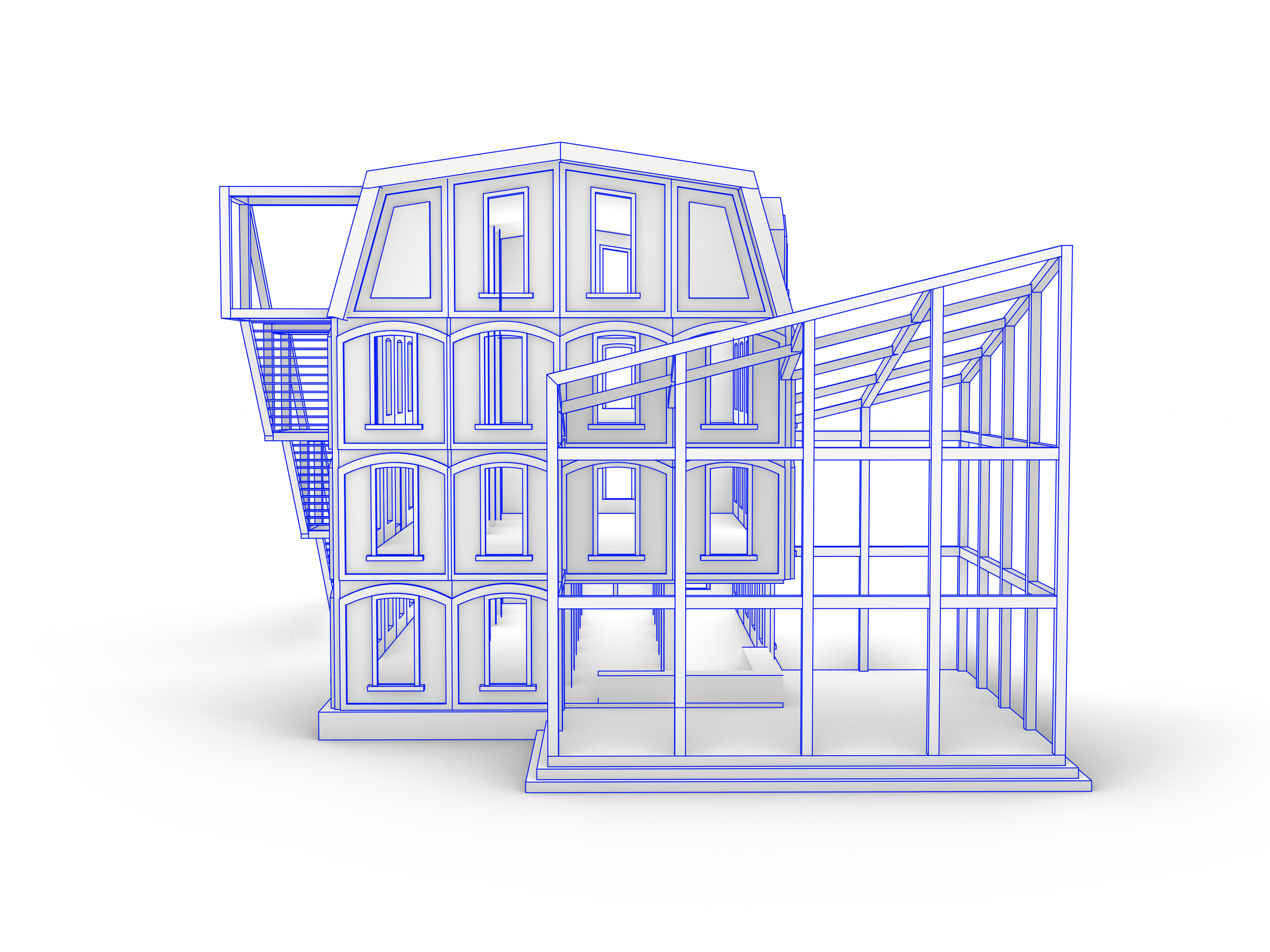
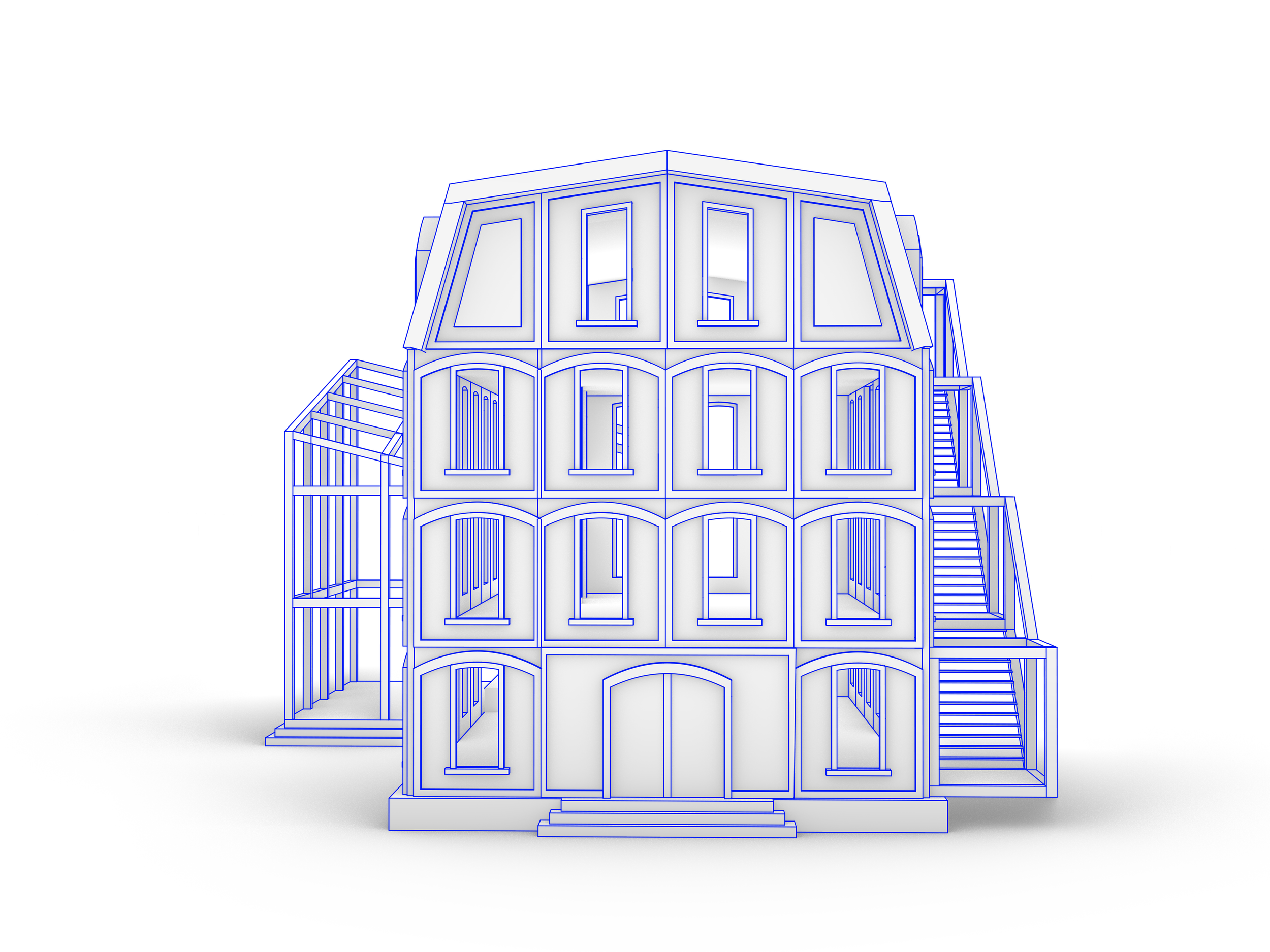
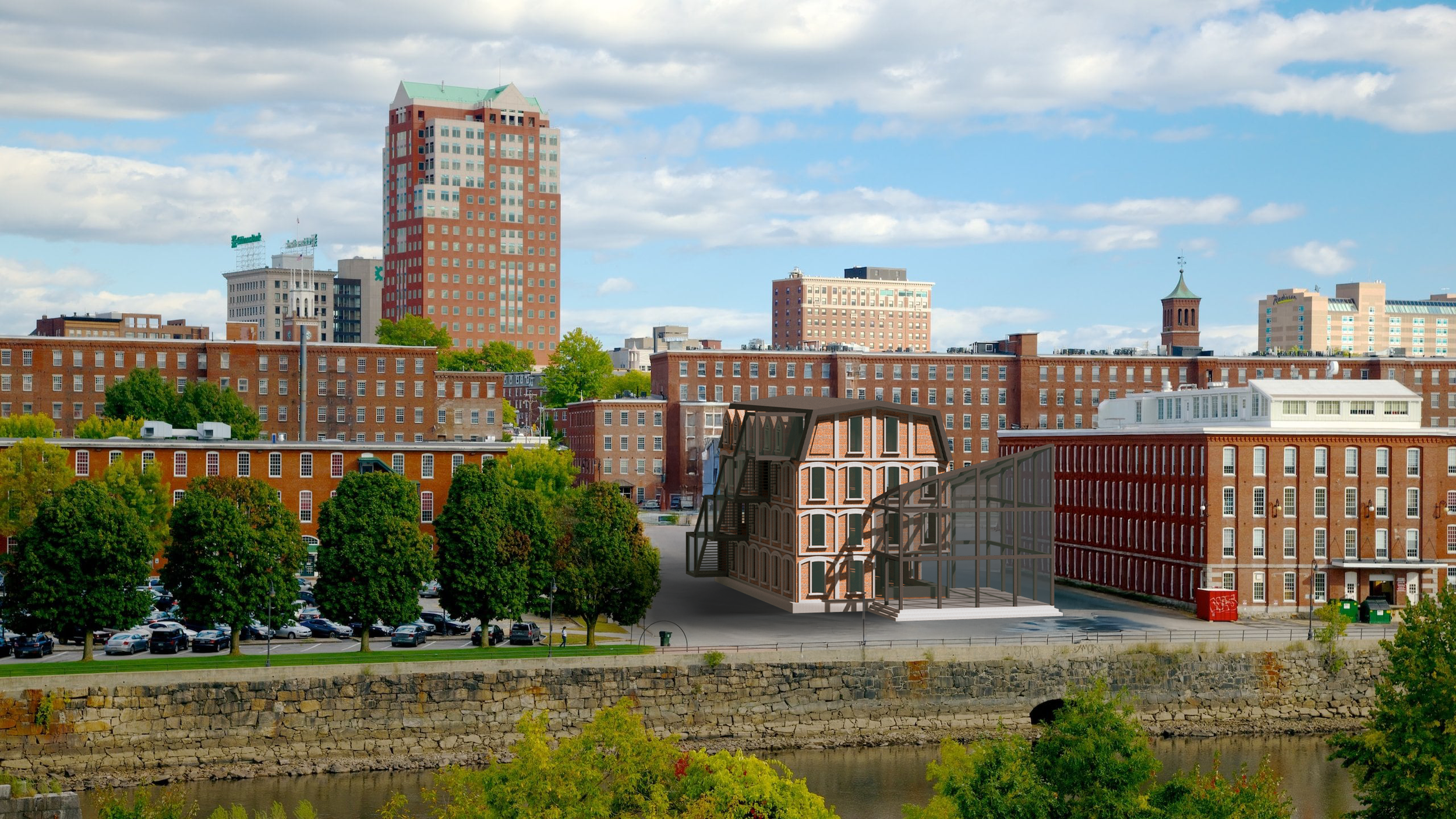
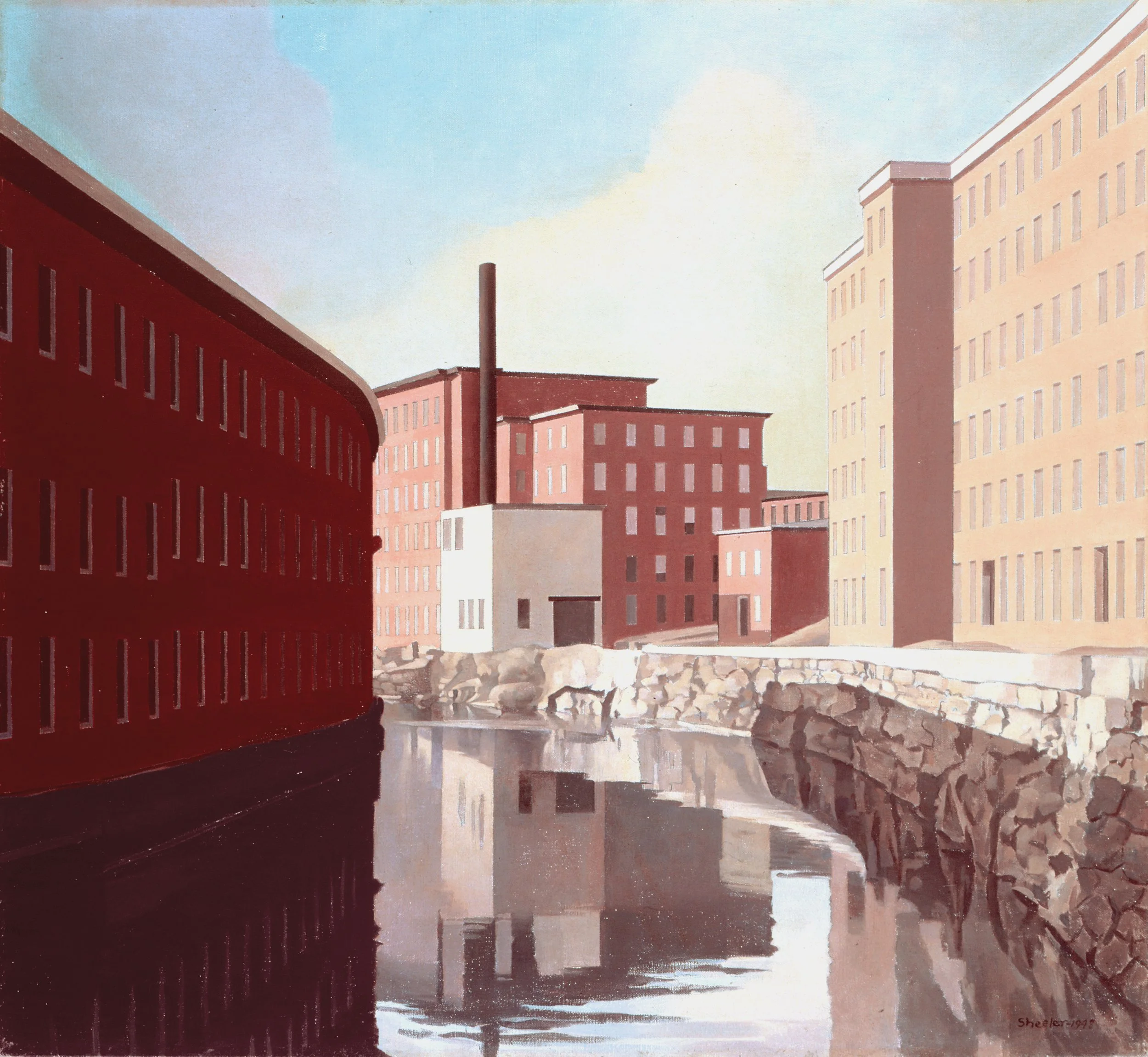
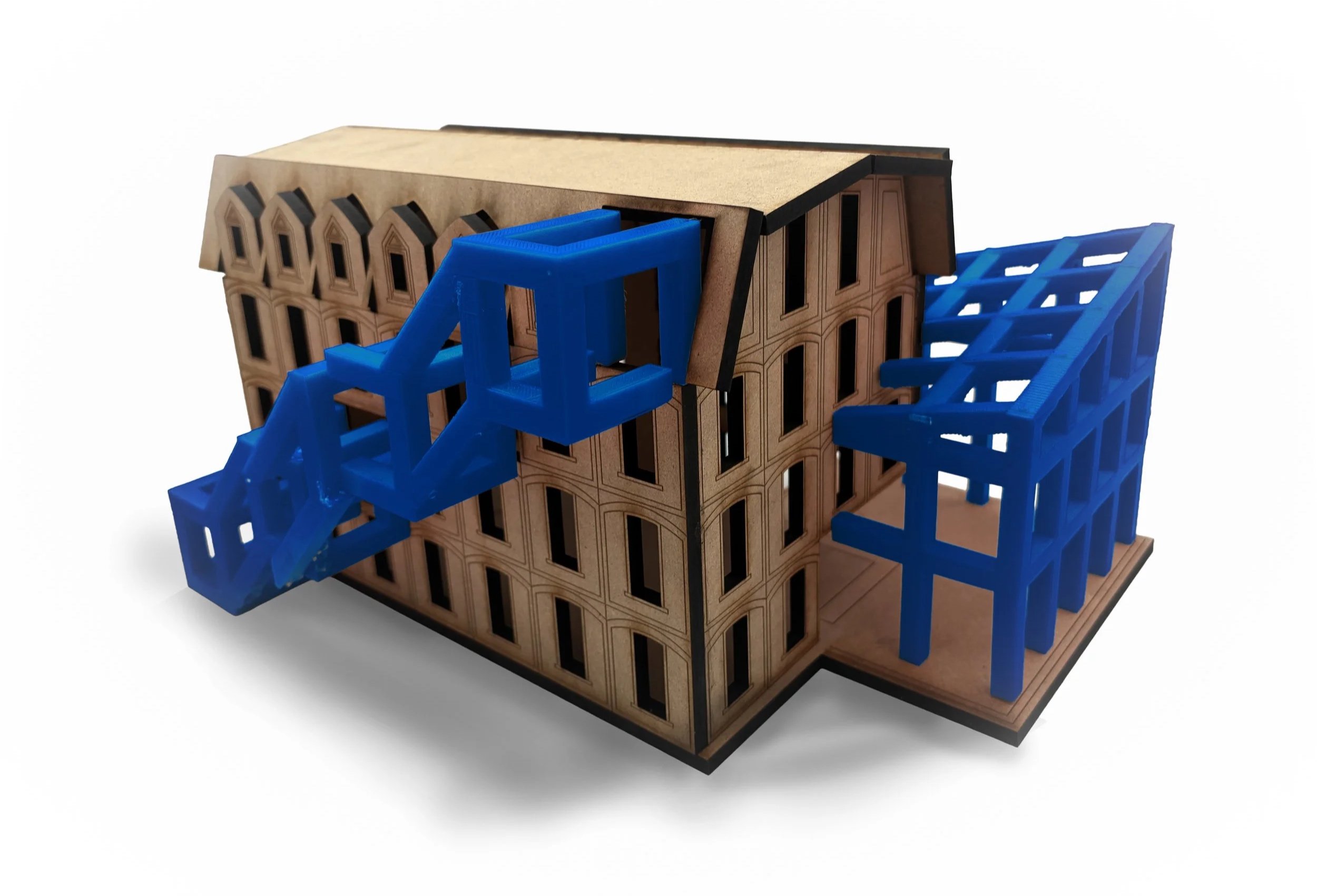
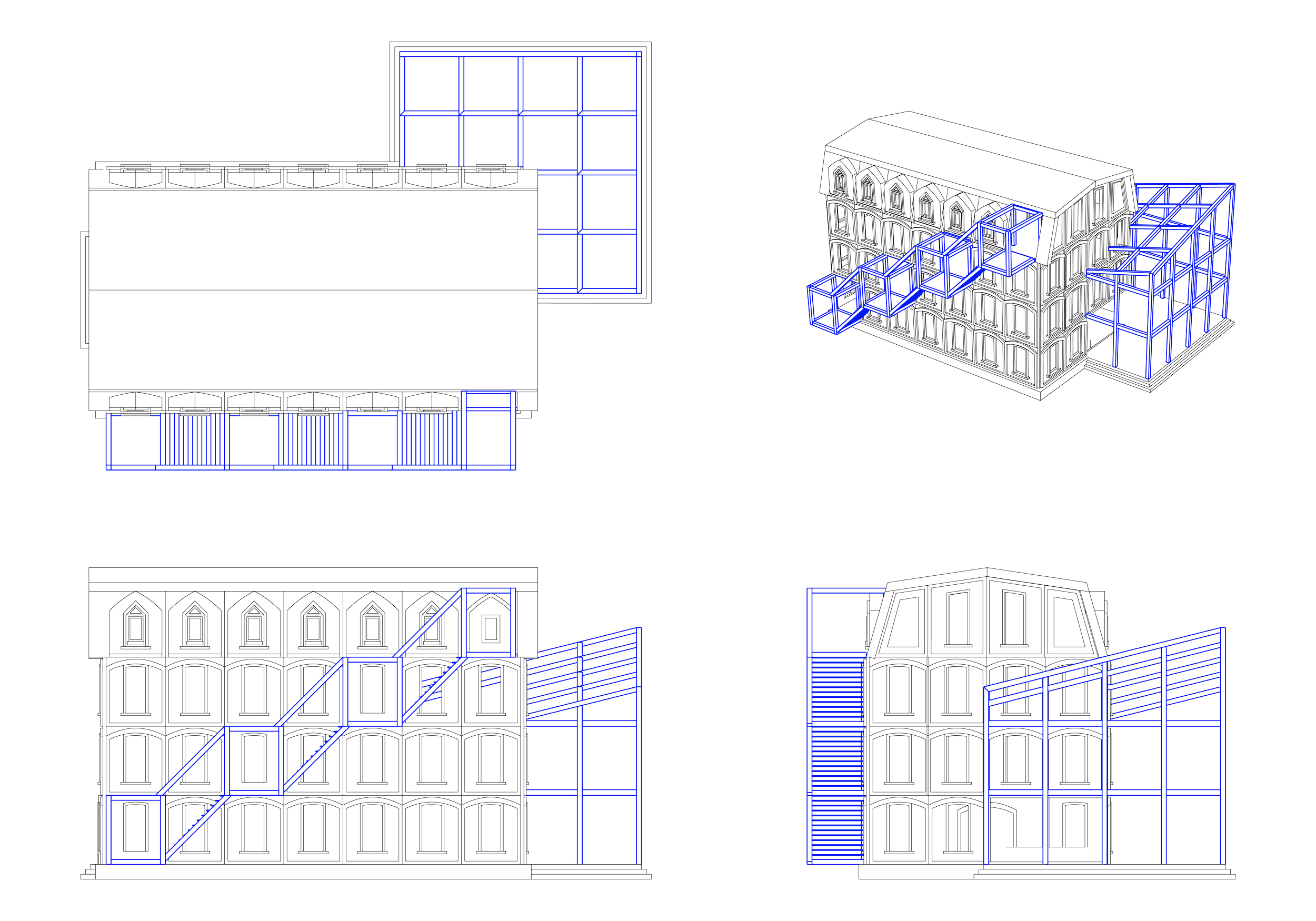
This project exists as both a critique of the dormancy of much of New England’s Millyard spaces as well as a critique of the traditional curated gallery. Thanks to geographical features, New England’s rivers are scattered with mill buildings. These buildings, which were once the industrial heart of America and shaped cities across the region, have in large part sat vacant in the more recent past. Over the last few decades these buildings have had a resurgence, being transformed into offices and living spaces. In this project I designed an imagined mill yard space along with adaptive renovations that turn the mill space into a four-floor art gallery with a grand entrance and external staircase. These additions are constructed with metal beams, a modern material that emphasizes the rebirth of the space when juxtaposed to the traditional brick, wood, and stone material pallet of the mill.
Artistic Collaboration
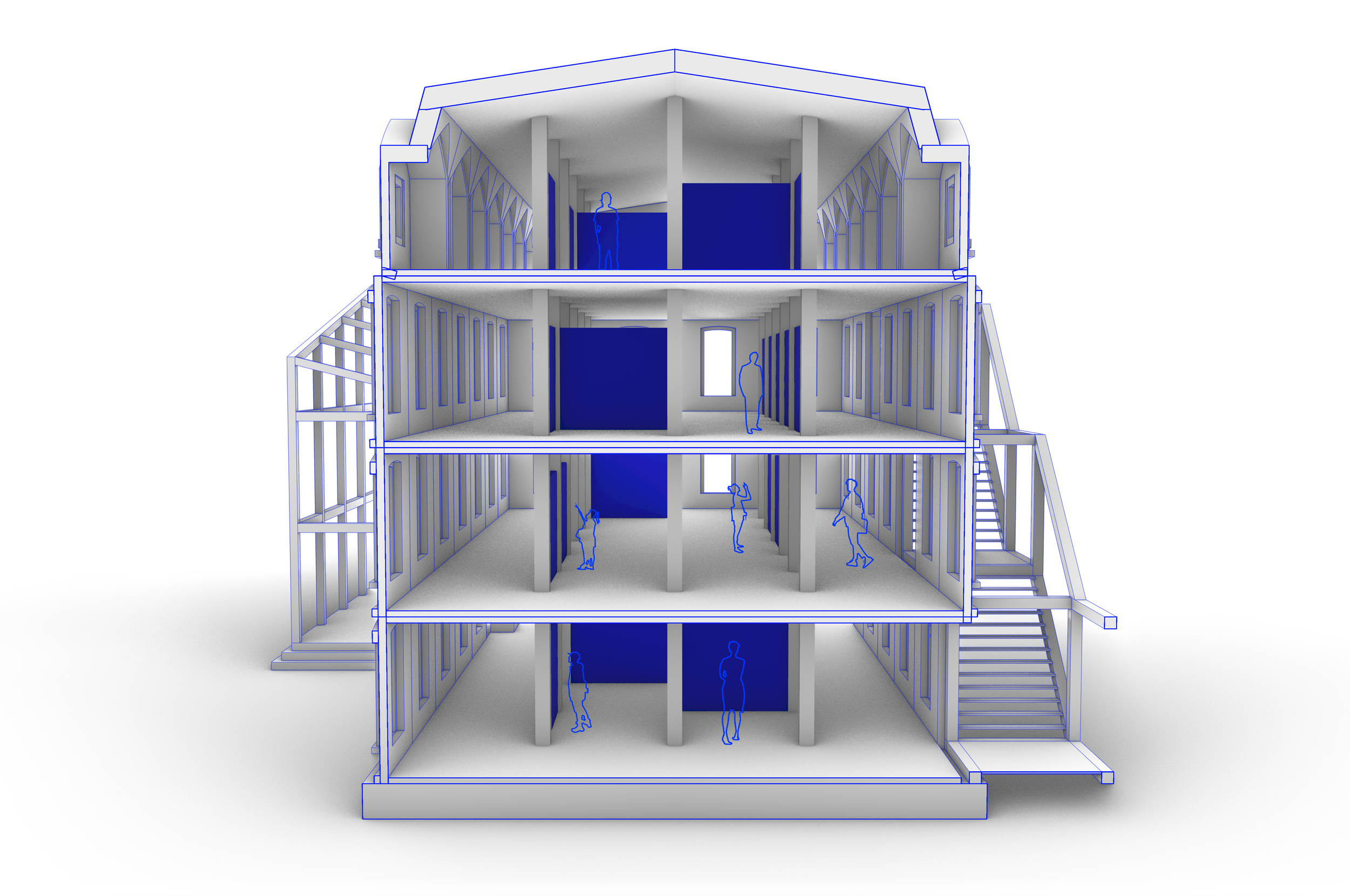
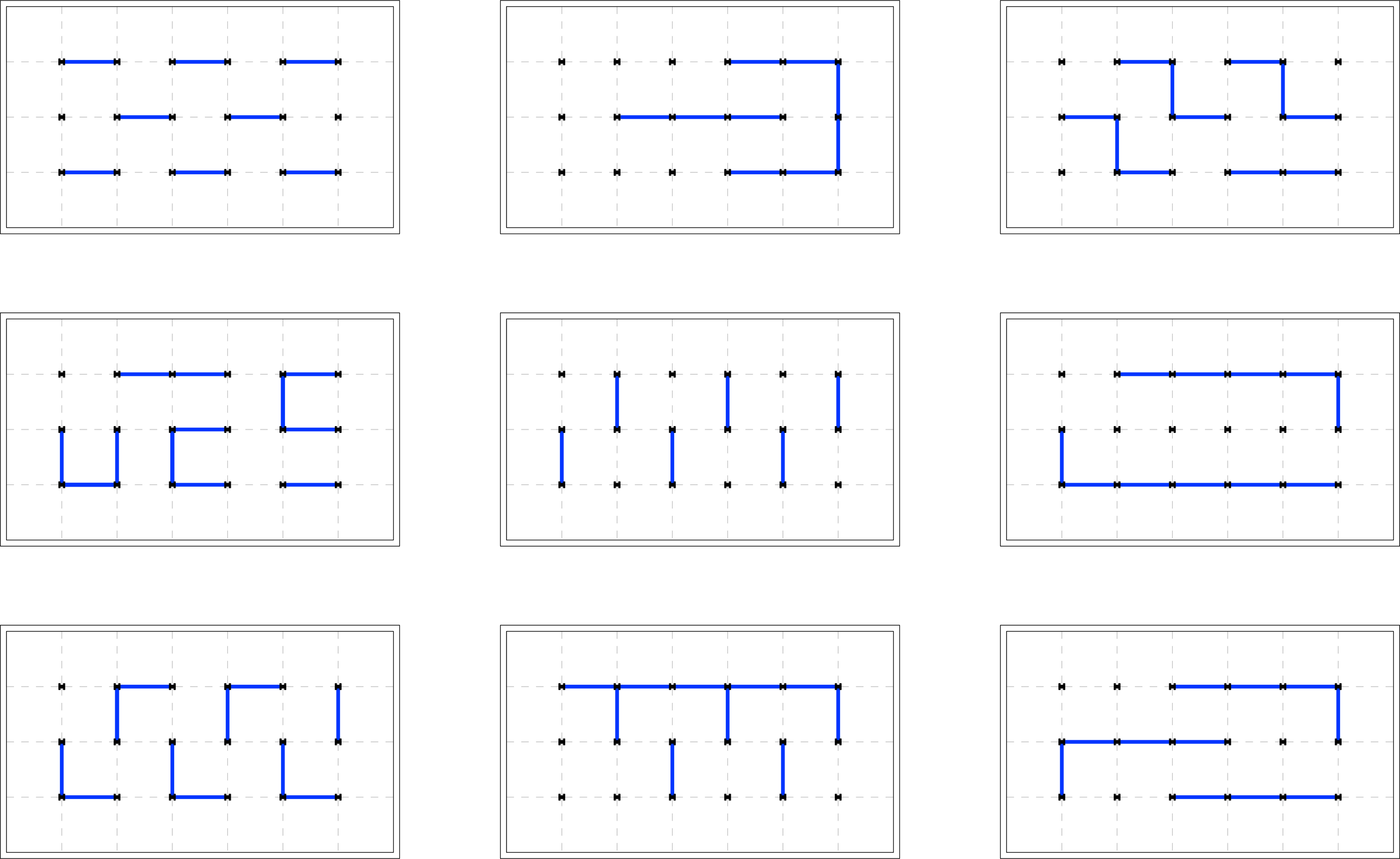
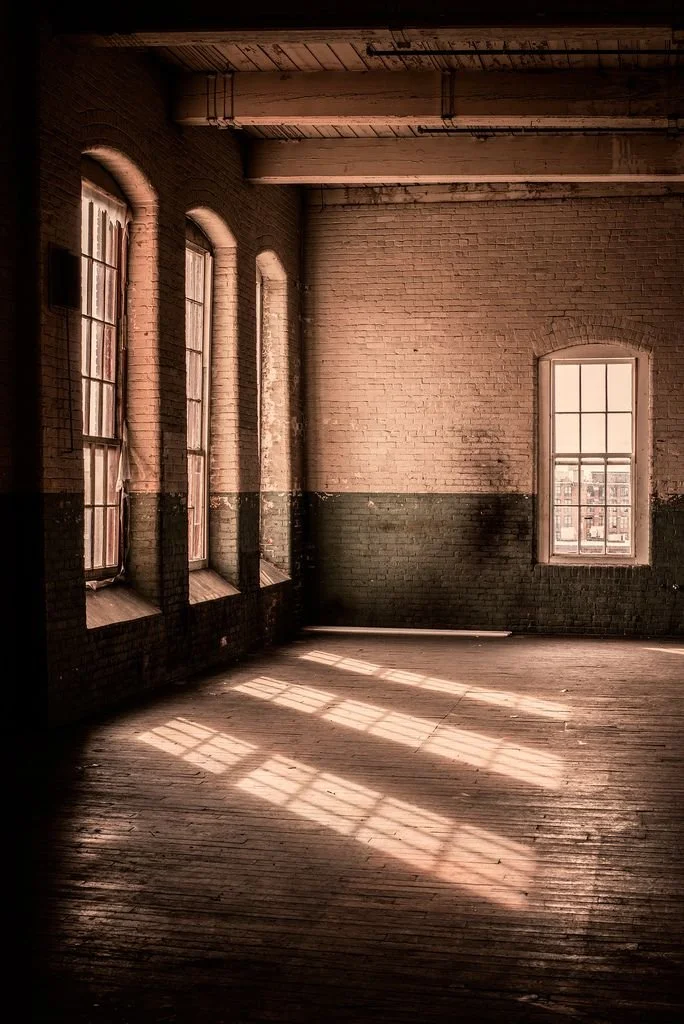
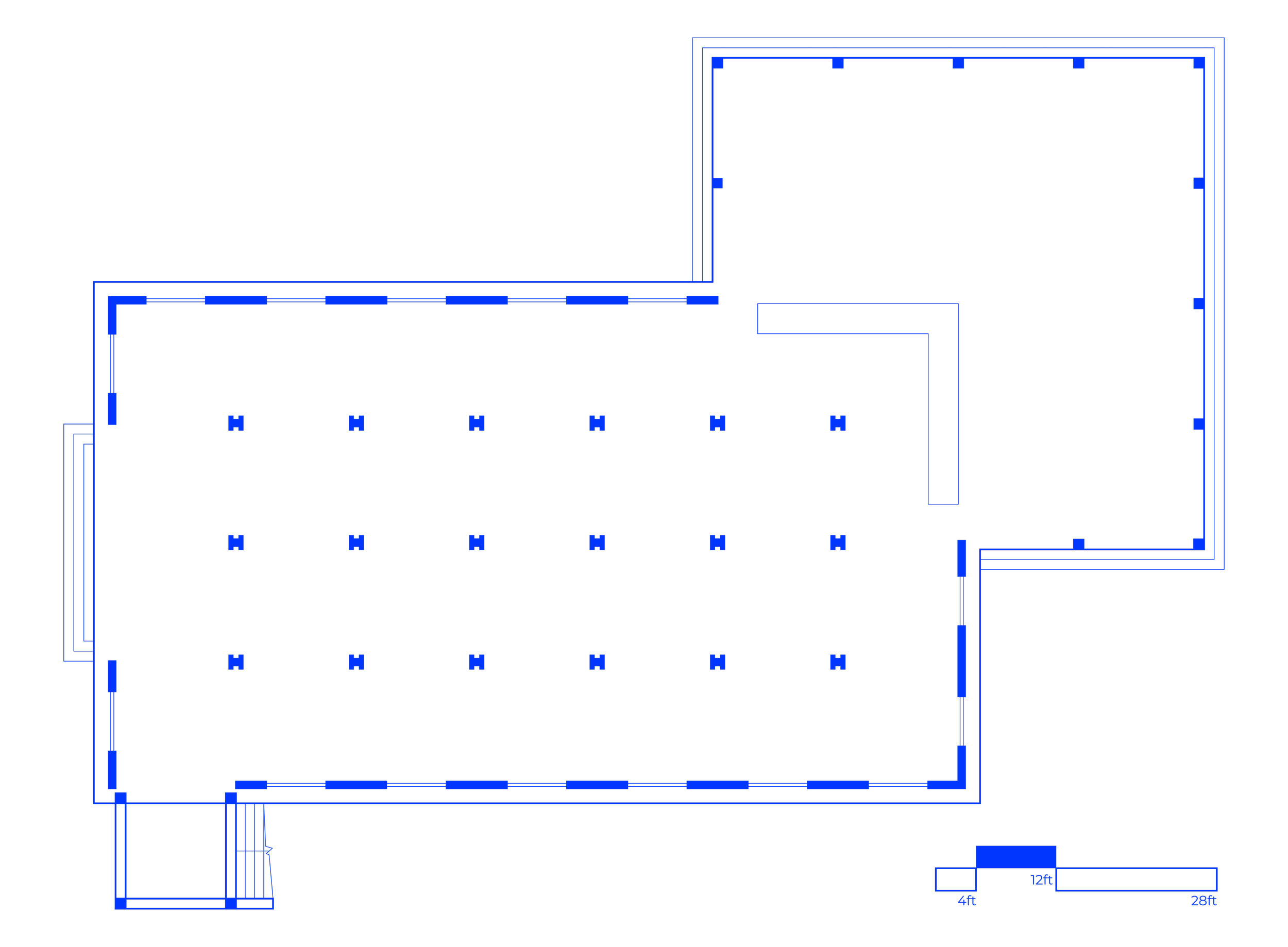
What sets this gallery apart from traditional display spaces is the collaboration between exhibiting artists in the exhibition and curation stage. The building is designed to host twelve artists in total — three to a floor. Unlike in most museums where a curator dictates the layout of the space the three artists are asked to work together to design the flow of the exhibit. The grid of structural columns on each floor gives artists a canvas to decide how to arrange the layout of the temporary walls from which their art hangs. The three artists can therefore direct the flow of viewers and collaboratively display work that tells a cohsive story, implies a timeline or provides conceptual progression.
Historical Significance
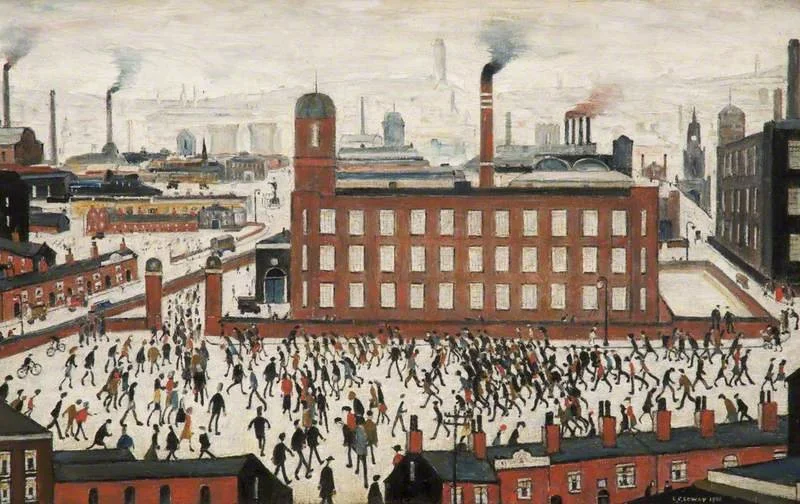
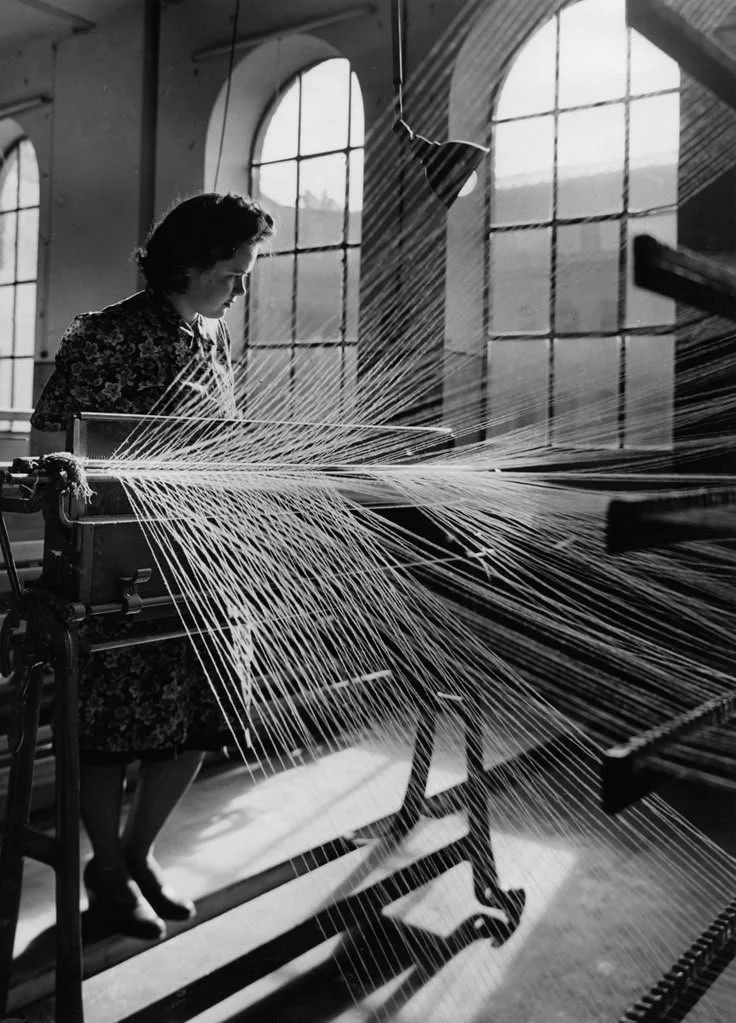
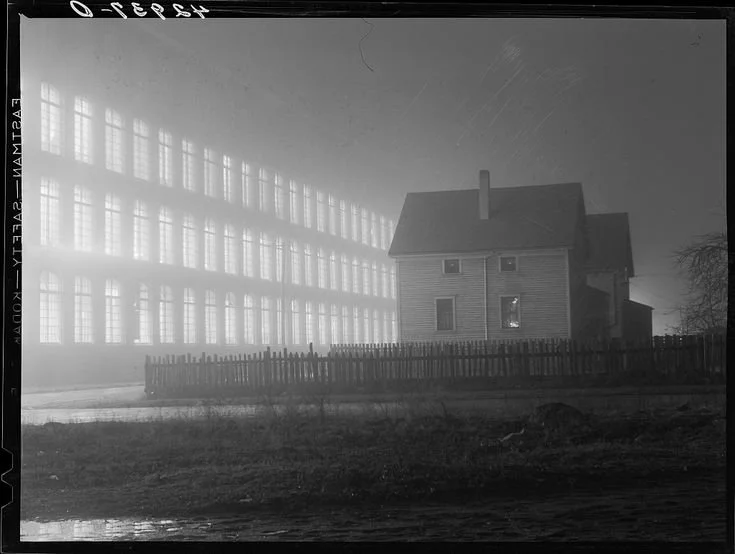
While rivers in other parts of the country are wide and slow moving making them ideal for transportation, New England’s many small, fast-flowing streams were perfect for early mills, supporting gristmills, sawmills, and later, large textile factories. The rapid flow of water powered turbines and made the region the center of the Industrial Revolution in America. The presence of an art gallery in a mill space not only enhances the cultural landscape of a former millyard but also gives reference to the craft practices involved in both the masonry and construction of the mill buildings as well as the textile work that took place inside these spaces.
Modularity
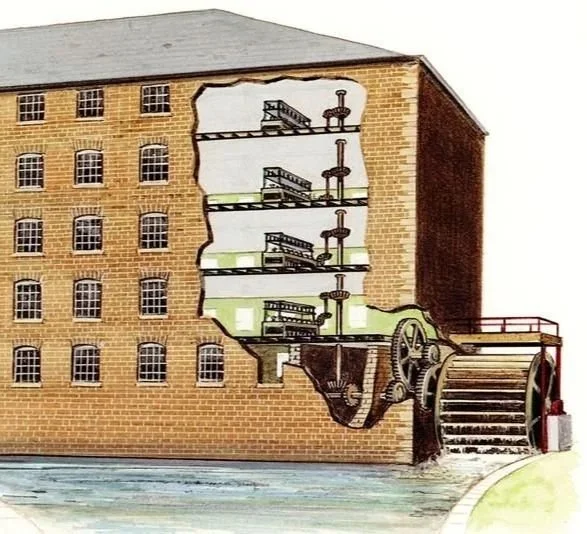
The design of the mill building being renovated is loosely based on architectural drawings by Charles Woolley Bage, a pioneer of fire-proof mill structures in the early days of the Industrial Revolution. As is typical of mill buildings from the time, there is rigid modularity in these buildings. Repetition in the placement of structural beams and windows on external walls split the buildings into cohesive cubicles that repeat vertically and horizontal across the structures. In the process of turning the space into a gallery, I felt it was important to work with the modularity rather than against it. By thinking of each floor as a grid, temporary installations can be constructed in accordance with the existing structure to create a unique experience for the curating artists and the viewer.
Symbiology
A driving inspiration for this project was analogy to the natural world. The thinking behind the revonvations emerged from an interest in symbiotic relationships. The goal was imitate the way members of separate species have evolved to work mutualistically in the wild (clownfish and anemones, bees and flowers, oxpeckers and water buffalo, etc.). The interventions in the space don’t have to be constructed from the same material pallet, or share a visual language, as long as they work together to serve the adapted function of the space as a gallery. The external staircase and entrance are built as if they are a different species, growing out of the older structure just as the cultural revival of these mill spaces is growing out of spaces that have been dormant for so long
The Path of Least Resistance
In the exhibition space itself, natural elements remained an inspiration. The flow of people through a space is arguably the most important thing to consider when designing an exhibition space. Just like a mycelial network or an octopus tasked with a maze, humans will move through a space from point a to point b in the most efficient way, unless their path is altered phsically or with visual signage. Here, the artists on each floor have the freedom to dictate how the path of viewers is altered. They are assisted by the choice to give each floor only one point of entry and exit.